



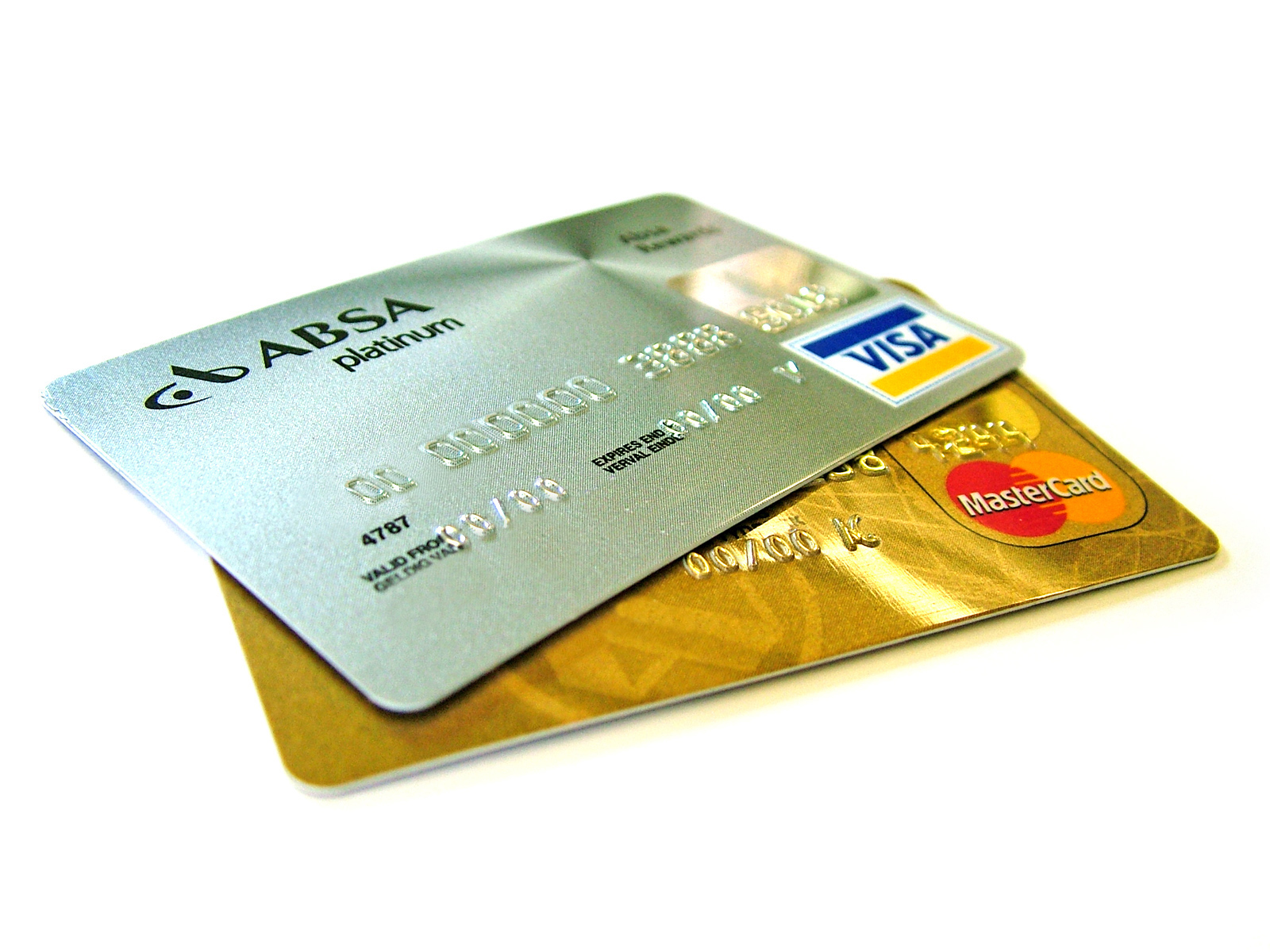
Illustrative photo — Several credit cards. Credit: Lotus Head — Wikimedia Commons, CC BY-SA 2.5 license. This photo does not depict the people discussed in this article.
Checking your own credit report does not lower your score.
The Financial Consumer Agency of Canada (FCAC) reiterates this in its guide. It also mentions the free access offered by Equifax and TransUnion. Therefore, a subscription is not required simply to obtain your report.
For someone newly arrived in Canada, this verification can help understand what is already in their financial history. However, it does not guarantee a loan, a credit card, or the acceptance of a rental application.

The report tells the story, the score summarizes it.
A credit report contains information about credit usage. The score, or rating, is a number calculated from information in the report.
Reading only the score therefore leaves out an important question: is the information used to establish it accurate?
A single figure can attract attention without explaining what warrants correction. The report allows you to review the recorded data and compare it to your own documents.
To prepare for this reading, it's helpful to gather your recent statements and a list of any known credit accounts. These documents are not meant to be sent to someone you found in an advertisement. They are primarily for your own verification.
Start from the official links
The ACFC provides links to free access to both offices. At TransUnion, the free report is notably called «Consumer Disclosure» in English.
The federal website states that online reports can be downloaded or printed. Free requests by mail are also possible.
The report and the score do not follow exactly the same procedures. The guide indicates free access to the Equifax score across Canada. For TransUnion, it mentions this access in Ontario and Quebec as part of the consumer report.
The important thing is to choose the service you actually want. Paid monitoring, alerts, or other products may be offered alongside free access. Their presence does not make a subscription mandatory to view the report.
Before confirming a registration, it is best to reread the name of the offer, its price (if any), its duration, and the renewal conditions.
Check what you recognize
An initial reading can be done in three stages: personal information, accounts, then information that appears unusual.
An old address doesn't have the same meaning as a completely unknown account. In both cases, you need to understand the source of the information before drawing any conclusions.
The FCAC recommends looking for errors and possible signs of fraud. It explains that bureaus have procedures in place to challenge information. A justified correction should not be confused with a sales pitch to quickly «fix» any rating.
Fictional example: A person recognizes their credit card but notices that the statement contains information inconsistent with their statements. Their first task is to precisely note the discrepancy and gather the relevant documents. This example does not prejudge the origin of the error or the outcome of a dispute.
Keep track of your actions
A clear request is easier to follow than a general message stating that «it's all wrong».
You can note the account name, the disputed item, and the reason for the disagreement. It is also useful to keep the date of the interaction, a copy of the message, and the response received.
This system allows the case to be resumed without having to repeat the entire explanation. It also avoids sending documents multiple times to different recipients without knowing who is handling the matter.
Financial documents must remain protected. A screenshot sent to a relative for advice may contain an account number, address, or other information that this person does not need.
A tool for your budget
For households that pay their expenses in Canada and also support relatives abroad, a credit report is one element of financial monitoring. It does not replace bank statements, monthly budgets, or loan offer verification.
A consultation can be useful for taking stock before an important step. It can also reveal that some information requires clarification.
A good result is not necessarily a higher score the following week. It is first and foremost a file that can be read, data that can be verified, and fees that have not been accepted without understanding them.
Sources: ACFC, « Getting your credit report and credit score » (link : https://www.canada.ca/en/financial-consumer-agency/services/credit-reports-score/order-credit-report.html) And « Checking your credit report for errors and fraud » (link : https://www.canada.ca/en/financial-consumer-agency/services/credit-reports-score/check-errors.html), accessed on November 15, 2026.